In 2020, Crossref’s board voted to adopt the Principles of Open Scholarly Infrastructure, and we completed our first self-assessment. We published our next reviews in March 2022 and December 2024. We are happy to present our latest self-assessment showing there are improvements in a number of areas representing steady progress but there are a few areas to work on and improve.
Ed Pentz, our Executive Director, opened the 2026 Annual Meeting by introducing the theme: Good infrastructure is patient work. Crossref provides foundational infrastructure: an open, persistent scholarly record of metadata, relationships, and identifiers that thousands of tools and services build on. Maintaining that infrastructure and creating lasting value depends on sustained collective effort. True persistence requires active governance, long-term financial commitment, and organisational stewardship.
In 2022, we committed to balancing our working practices and environmental impact, and to openly reporting on those efforts. This is our third report on Crossref’s annual carbon footprint and reflects as much our emissions as it does our learning process. Travel remains the main area of our environmental impact. In 2025, our total emissions were 170 tCO2e, a 3% increase from 2024, with travel accounting for 85% of the total. A big change this year is that we have greater visibility into our AWS-related emissions. With the full transition of our metadata registry and content registration system to the cloud and significantly increased API use, we’re seeing higher carbon costs to host and run our services.
As we approach the end of 2026, research integrity remains a critical focus for the scholarly publishing ecosystem: fast technological advancements are constantly pushing the boundaries of integrity, impacting how everyone in this space interacts with the scholarly record.
Crossref Ambassadors act as local points of contact, meeting editors, librarians, researchers, and institutions to help them navigate Crossref services and understand how strong metadata supports visibility, integrity, and trust in research. They explain how to participate in our rich network of connections between works, people, and institutions, in ways that make sense in their own contexts. And last year, being our 25th anniversary, Ambassadors also massively contributed to our celebrations!
In 2025, the Crossref Ambassador Programme continued to grow globally with 51 volunteers from 41 countries. We were delighted to welcome five new Ambassadors: Ahmet Anıl Müngen (Turkey), Mokheseng Richard Buti (South Africa), Richard Risasi (Democratic Republic of the Congo), Pedro López Casique (Mexico), and Nadia Boutaleb (Morocco).
During the year, Ambassadors promoted the value of robust metadata through webinars, including Metadata Health Check sessions in Arabic, Bahasa, French and Turkish, alongside conference participation and institutional visits across their regions. While others were more active in the Crossref Community Forum, bringing questions from their communities and contributing to discussions that helped others learn and problem-solve together.
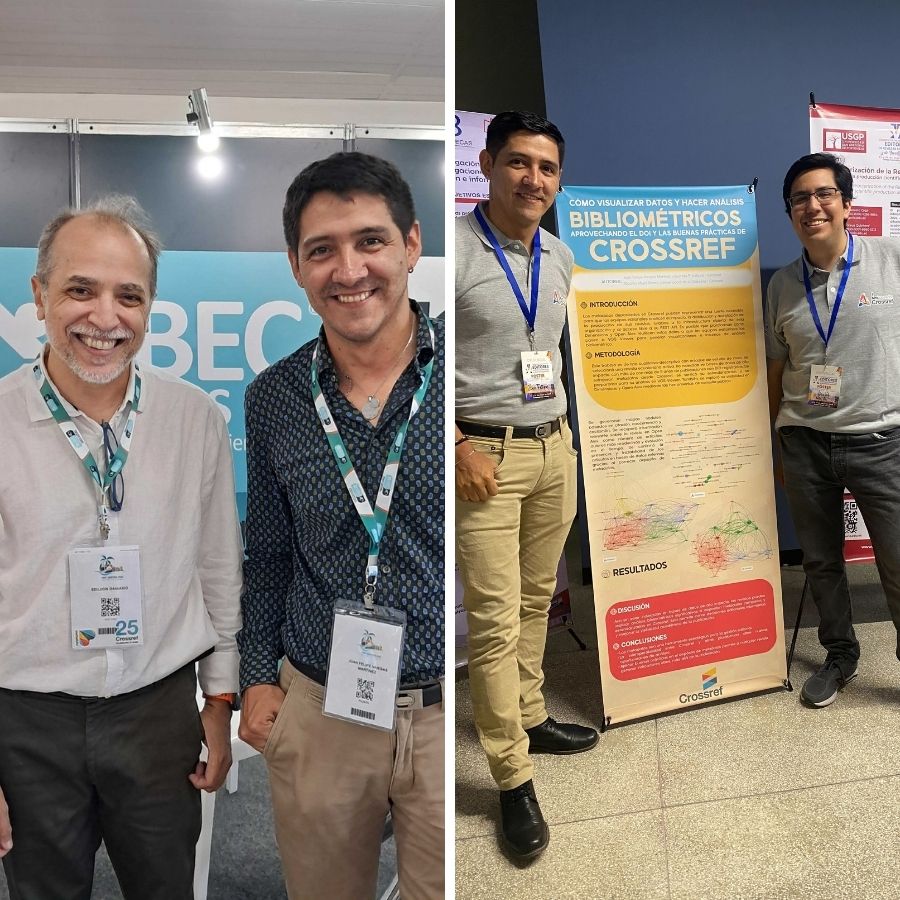
ABEC Conference 2025 in Brazil and the 5th Latin American Scientific Journal Editors and Researchers Congress in Colombia, with Crossref Ambassadors engaging editors and researchers.
Highlights
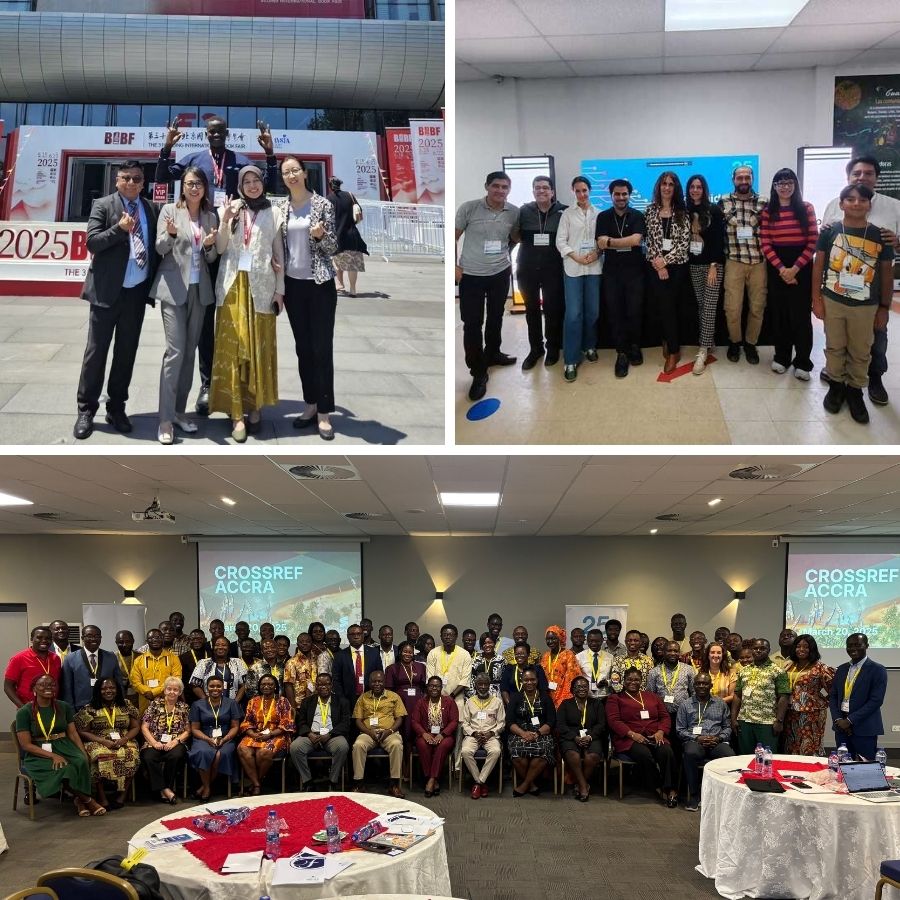
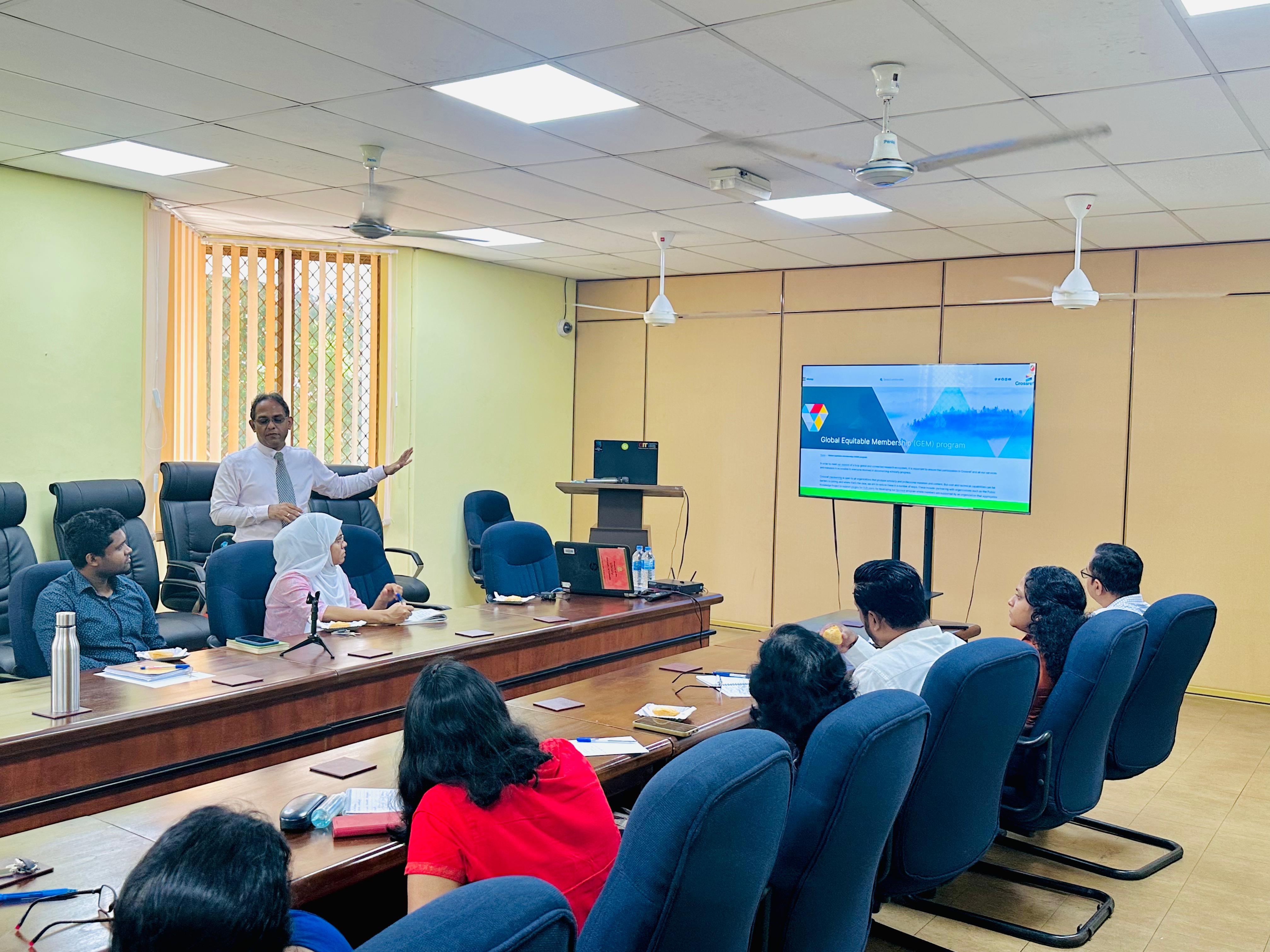
We endeavour to stay in touch with our communities locally, and Ambassadors play a critical role in these efforts. Ambassadors joined the first Metadata Sprint in Spain, supported engagement at the Beijing International Book Fair, and co-organised local Crossref events, such as Crossref Quito and Crossref Accra. Others played active roles in the Global Equitable Membership (GEM) program, engaging communities in Sri Lanka, Tanzania, Ghana, and Senegal.
Ambassadors connecting with the scholarly community at the Beijing International Book Fair (China)(upper left), Crossref Quito (Ecuador)(upper right), and Crossref Accra (Ghana).
Dr. Lasith Gunawardena leading a GEM programme workshop at the University of Colombo, Sri Lanka.
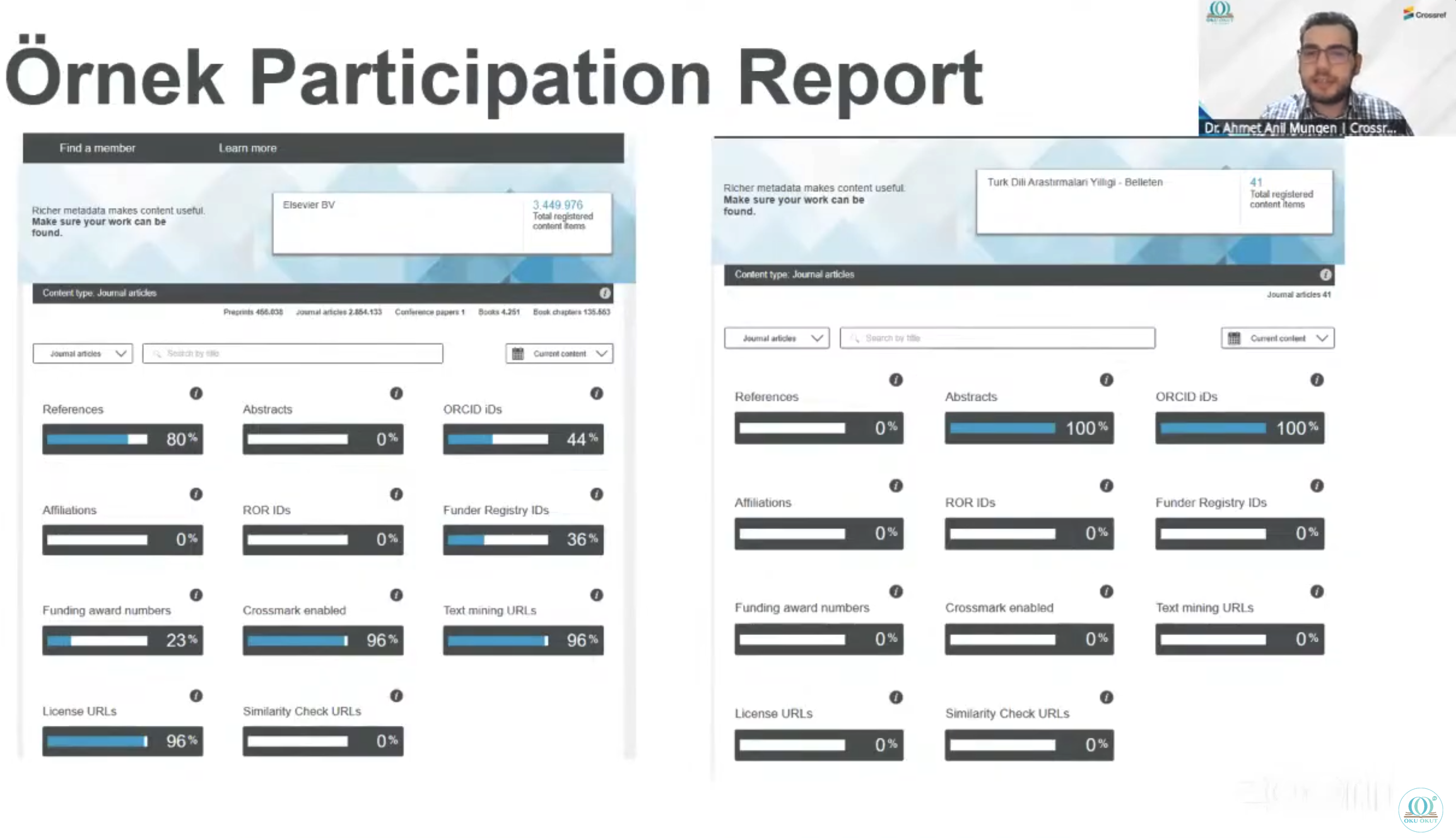
Some Ambassadors delivered metadata health check sessions in French, Turkish, Bahasa, and Spanish. Several institutions supported by Ambassadors went on to become new Crossref members, while others began conversations about improving their metadata completeness.
Crossref Ambassador Ahmet Anıl Müngen hosting a Metadata Health Check webinar in Turkish.
Ambassadors contribute their understanding of the industry and local contexts, and their communities’ feedback into Crossref, too. Nicolás Mejía Torres, Juan Felipe Vargas, Ahmed Moustafa, Sandra Gisela Martín and Guo Xiaofeng have recently joined our new Metadata Advisory Group, where they support us to craft our metadata for the future in tune with the community’s needs, and in particular, helping us shape how we reflect global scholarship through multilingual metadata.
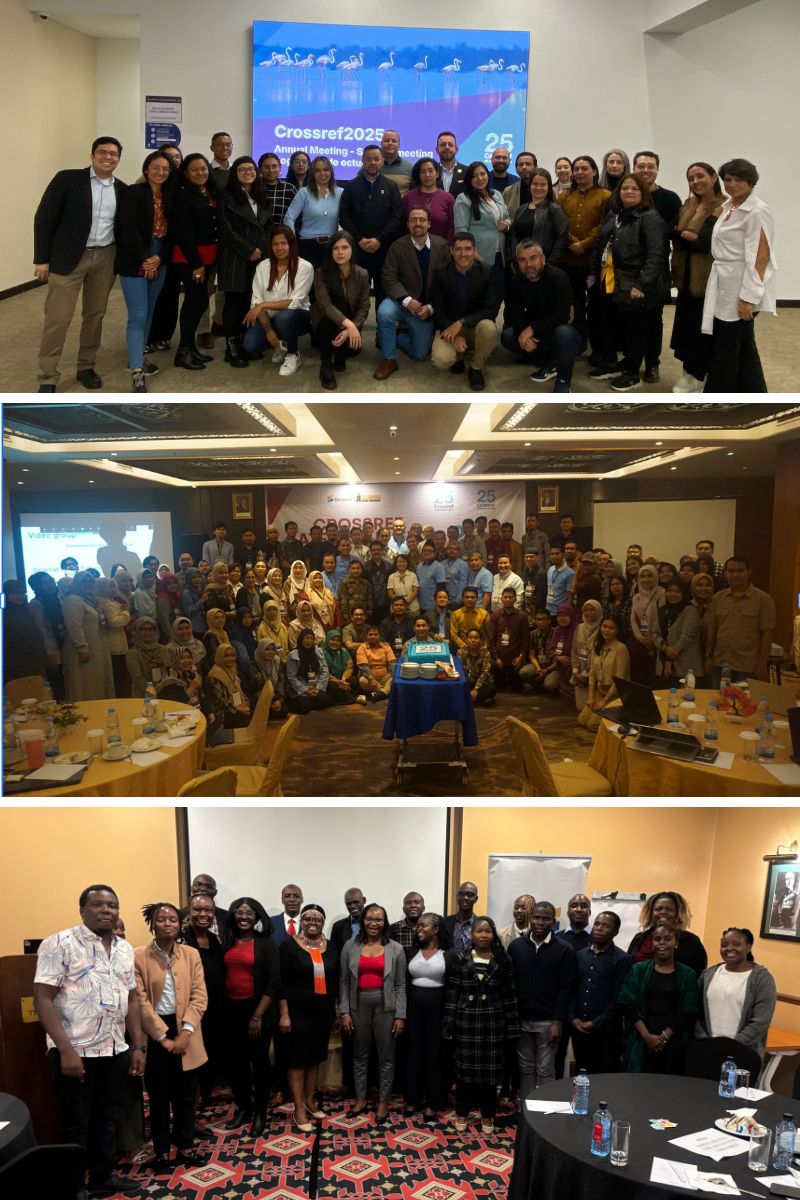
To mark Crossref’s 25th anniversary, a celebratory series of Ambassador-led satellite events was hosted to coincide with the Annual Meeting. These events, held in Nairobi (Kenya), Bogotá (Colombia), and Medan (Indonesia), featured workshops, presentations, and a watch party, allowing attendees to synchronously join the main live annual meeting program.
Crossref satellite events bringing local communities together in Bogotá (top), Medan (center), and Nairobi (bottom).
Many of our Ambassadors routinely organise virtual meetings and webinars. Recognising the growing need for effective online engagement, we partnered with the Centre for Scientific Collaboration and Community Engagement (CSCCE) to deliver a targeted training program focused on the advanced skills of convening and facilitating highly engaging and interactive online events. This intensive training was designed to provide our Ambassadors with practical techniques and resources for maximising participant involvement, fostering dynamic discussions, and ensuring that their online gatherings are both productive and stimulating. Equipping Ambassadors in this way ultimately strengthens the overall effectiveness of their outreach and community-building efforts.
Challenges & lessons learned
Alongside successes in their roles as Crossref Ambassadors, many balanced the role alongside demanding professional responsibilities, while others encountered language gaps or uneven awareness of Crossref across their regions. In some contexts, limited institutional readiness or infrastructure meant that engagement required more foundational work and patience.
These experiences offered valuable lessons, including the importance of demonstrations, translated reference and training materials, and more regionally tailored support.
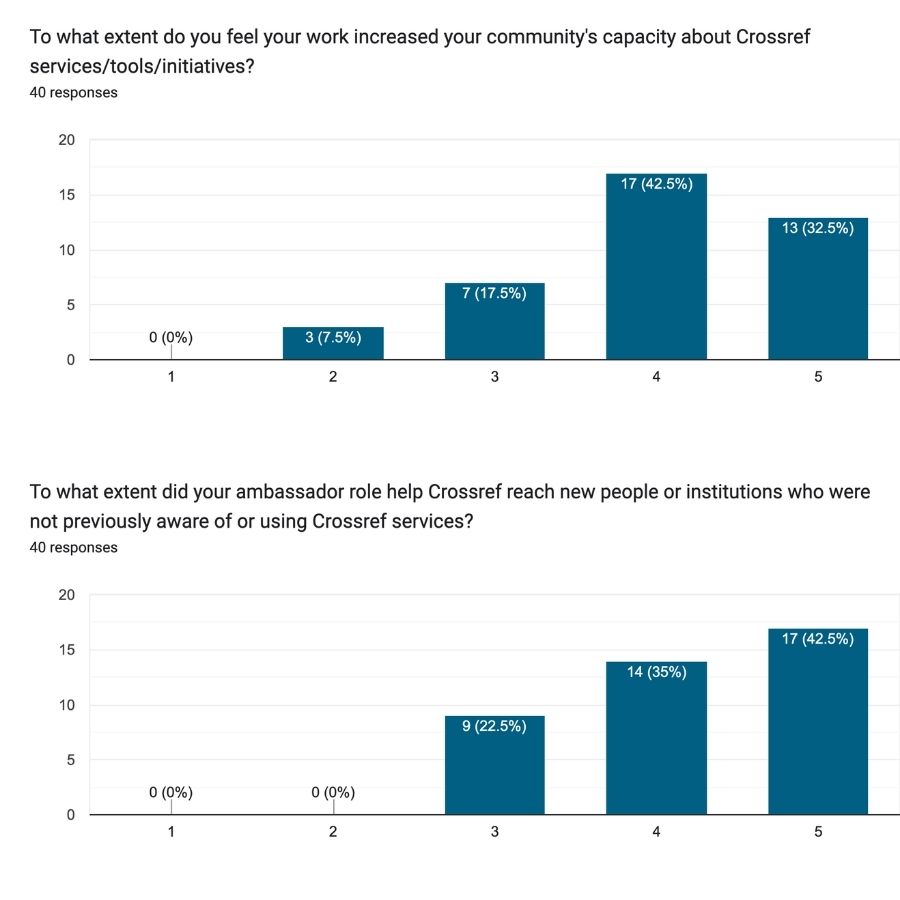
The impact of the programme was also reflected through Ambassador feedback. In the annual survey, most reported feeling that their work had significantly increased their community’s capacity to understand and use Crossref services. Similarly, Ambassadors reported that their role helped Crossref reach new people and institutions that were previously unaware of Crossref.
Survey results showing how Ambassadors increased community capacity around Crossref services and helped reach new institutions (40 of 51 responses).
In 2025, Ambassadors delivered 43 activities, including training sessions, webinars, events, translations, and feedback on tools and services both individually and collaboratively, reaching more than 1,200 people worldwide.
In 2026, the priority for the program includes strengthening regional and multilingual outreach, increasing visibility of the Ambassador role, expanding access to up-to-date resources and tools, and creating more opportunities to connect with Crossref staff.